
Everyone talks about Bologna. Everyone books a trip to Parma or Modena. Reggio Emilia sits right between all three of them, and almost nobody mentions it. I think that’s a mistake.
After a day spent mostly eating my way around the place, followed by a trip behind the scenes at a real Parmigiano Reggiano dairy, I’d put this city up there with any of its more famous neighbors.
This is everything from that visit: the market, what to eat, where to stay, how the cheese actually gets made, and a few history stories that genuinely surprised me.
My Quick Reggio Emilia Travel Guide
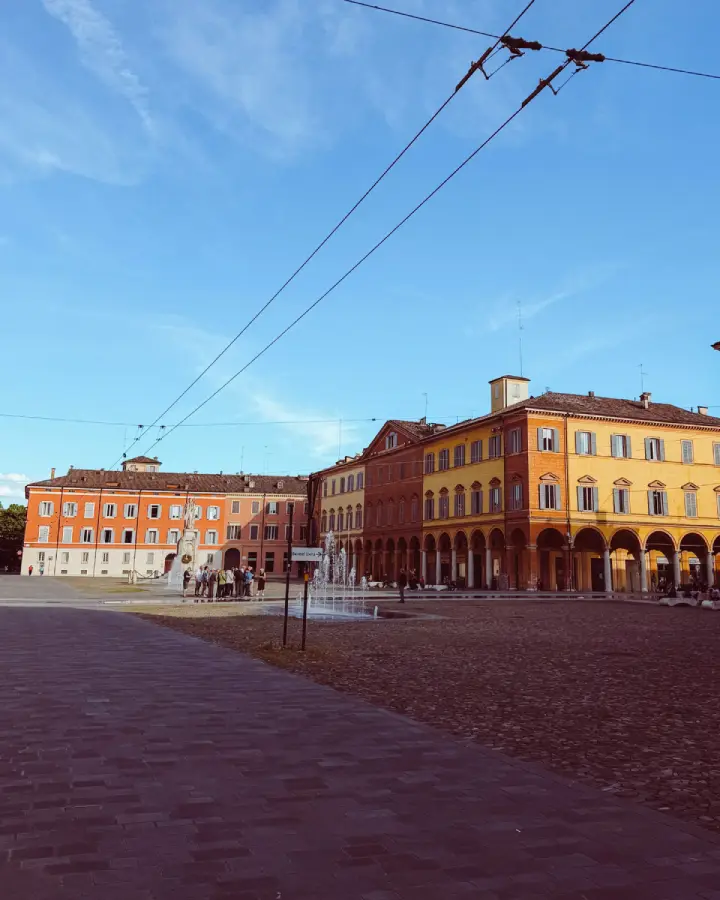
Piazza Prampolini, Reggio Emilia
My Quick Reggio Emilia Travel Guide
This is a long post, so here’s the short version. Bookmark it and come back if you need to. 😄
Top Things to Do
- ✦ Tour a working Parmigiano Reggiano dairy like Latteria La Grande, and stay for the tasting.
- ✦ Hit the Saturday market at Piazza Fontanesi and eat erbazzone straight from a stall.
- ✦ Step into the Sala del Tricolore, where the Italian flag was decided in 1797.
- ✦ Grab a coffee in Piazza San Prospero in the evening and just sit.
Getting Around
The old town is small, walk everywhere. If you’re taking the train, book to Reggio Emilia, not Reggio Emilia AV Mediopadana, which is 4km outside town. Driving in isn’t worth it either, the center has a restricted traffic zone (ZTL).
Where to Stay
Base yourself near Piazza Prampolini or San Prospero. Hotel Posta is the pick for history, a 500-year-old palazzo right on the square. Albergo delle Notarie is a solid four-star nearby with its own parking. Albergo Reggio is the cheaper option, same location, lower price.
How Long to Stay
One day covers it. Two if you want to slow down.
A Saturday Morning in Piazza Fontanesi
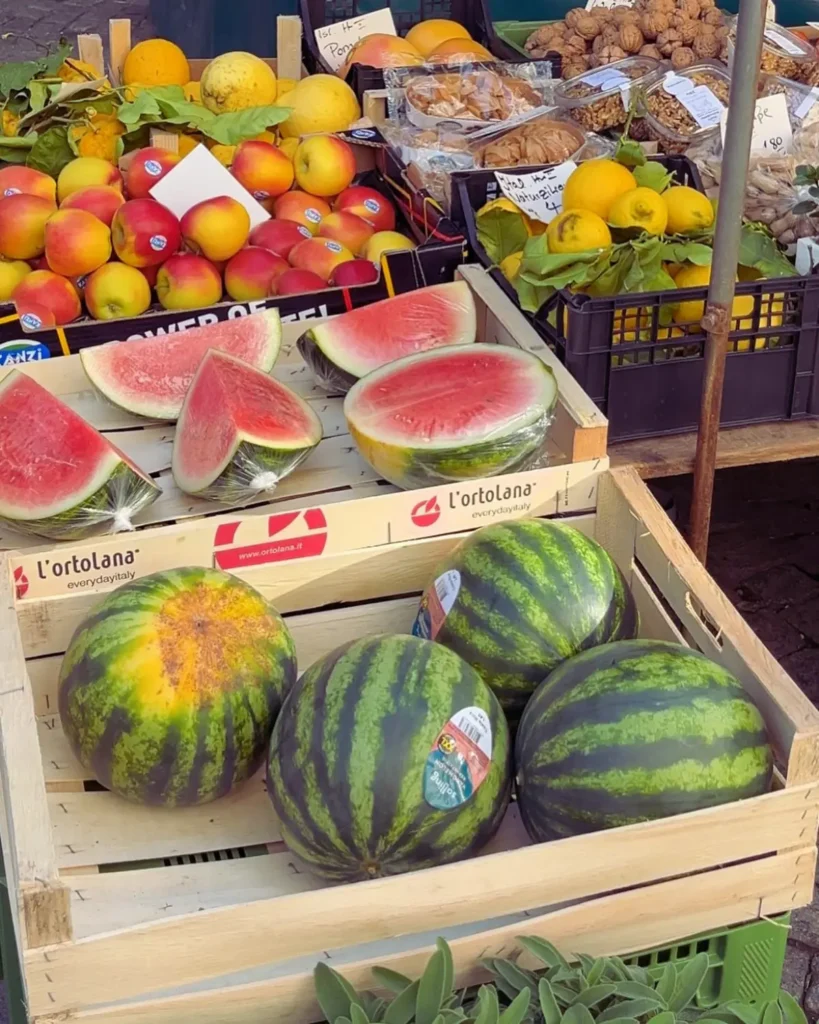
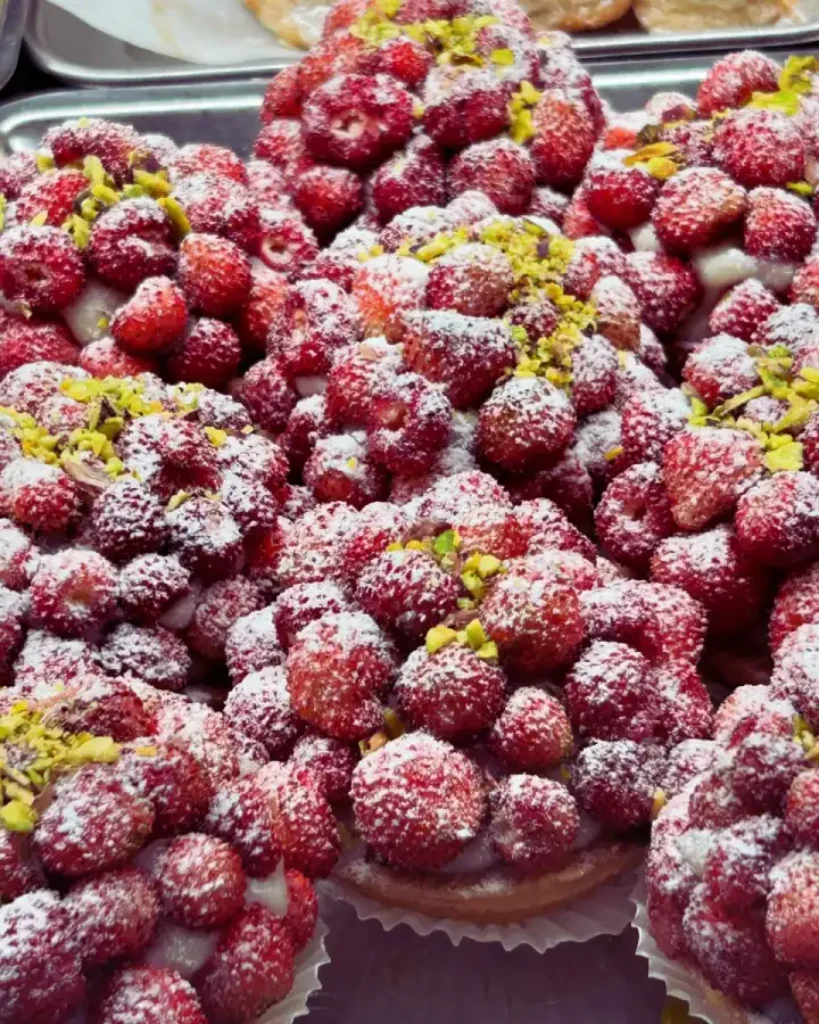
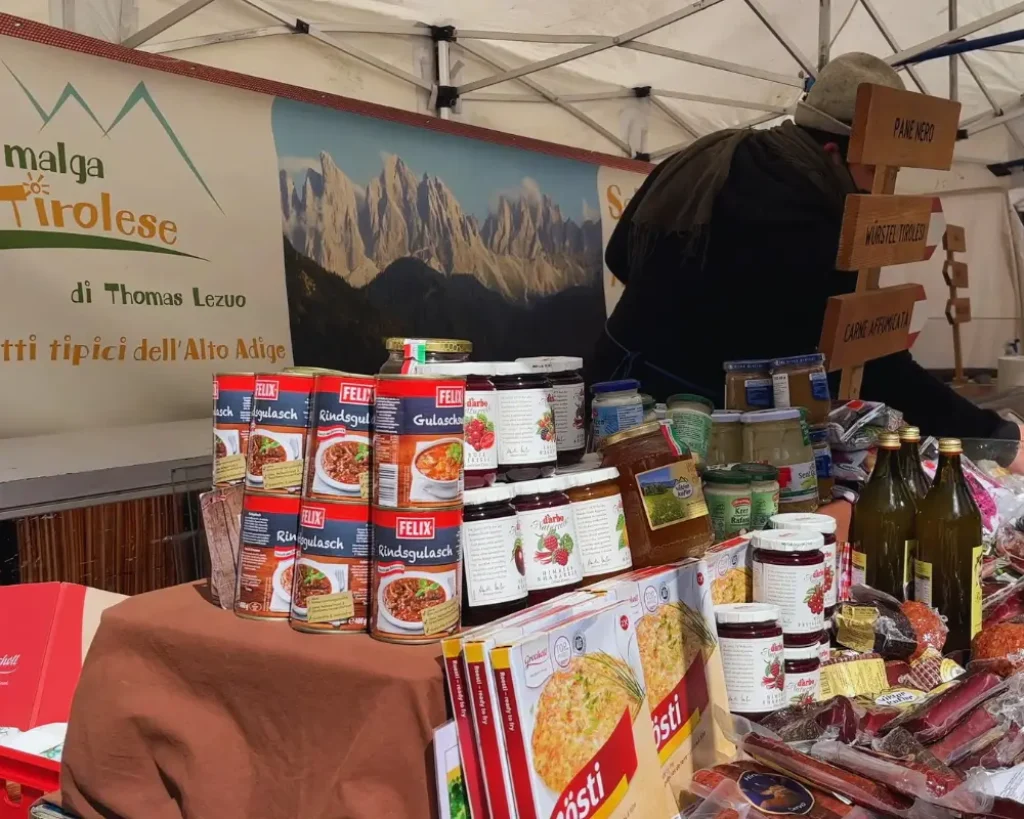
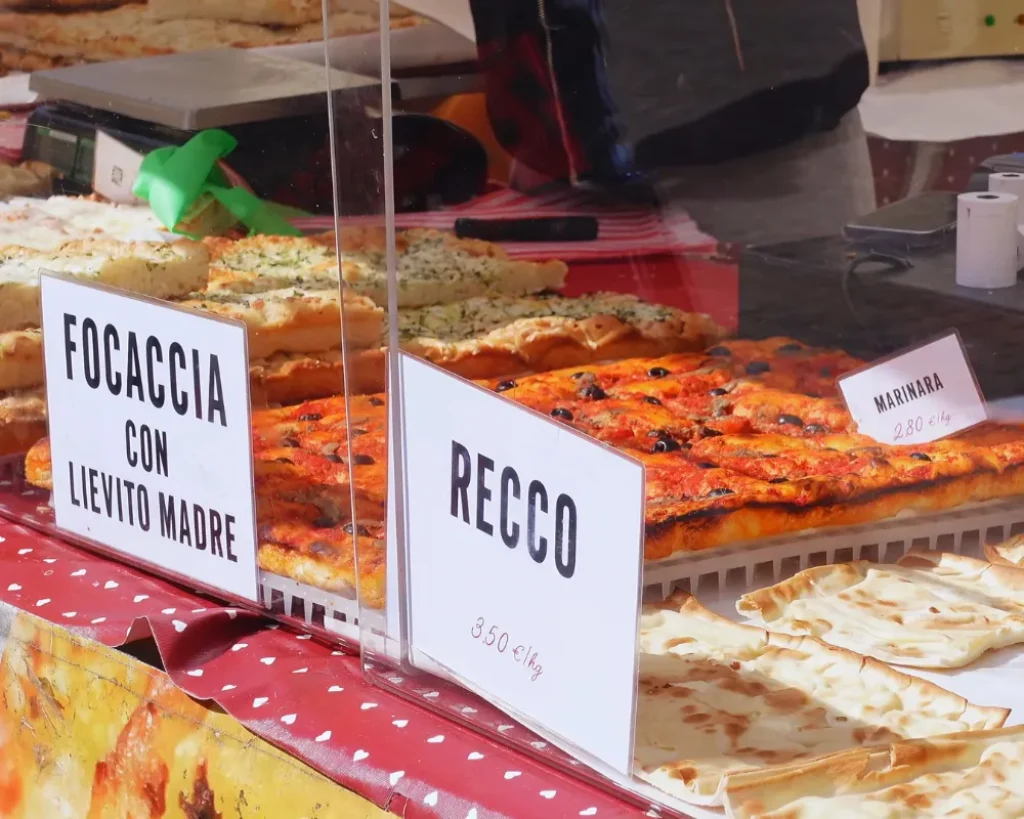
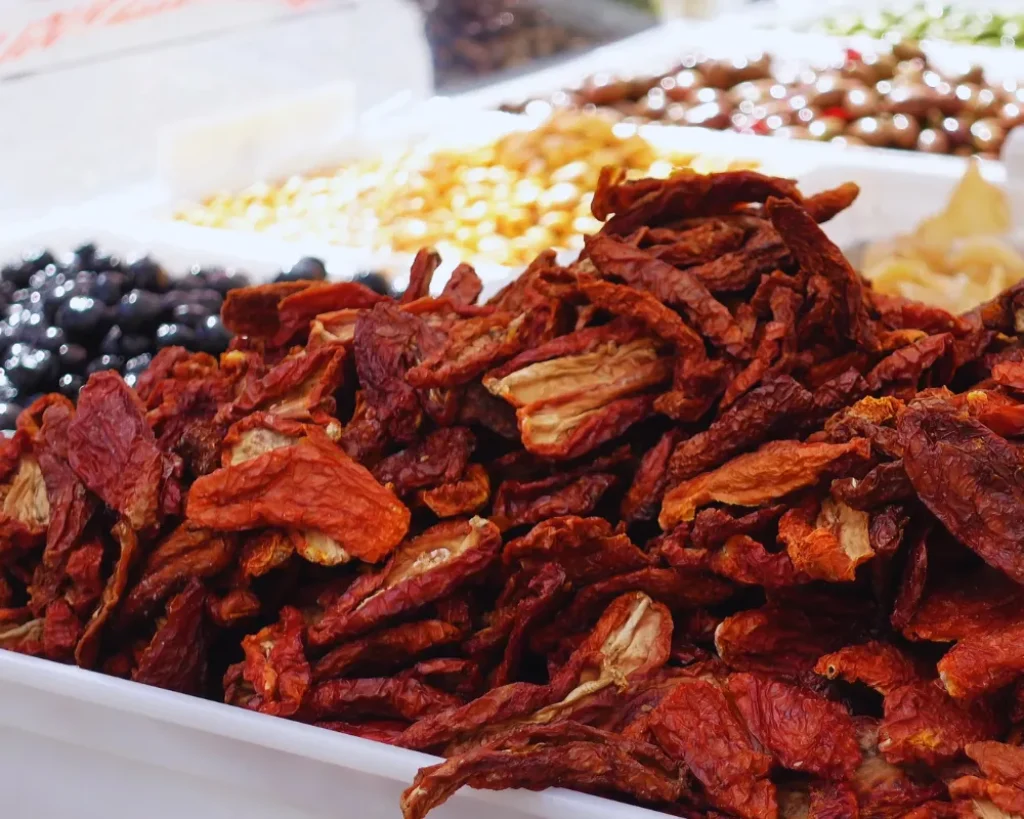
I showed up on a Saturday, which turned out to be the right day by accident. Piazza Fontanesi runs a farmers’ market every Saturday until half one, and I got there while the stalls were still packed: wheels of cheese stacked in pyramids, crates of chard, honey jars lined up in rows, whole strings of garlic hanging off the awnings.
An old man was loading unsold mushrooms back into his van. A kid on a bike nearly took my ankle off cutting across the square. It didn’t feel staged for tourists, mostly because there weren’t any. It was just Saturday.
I hadn’t planned lunch, so I followed the smell of frying garlic across the square and landed on erbazzone.
Erbazzone: The Dish to Know Before You Come Here
This is the one thing I’d tell you to eat if you only try one thing in Reggio. It’s a savory pie, but forget the light, flaky version you might be picturing. The crust, called fuiada here, is made with lard, so it shatters rather than flakes when you bite into it.
Inside is a dark green, deeply savory mash of chard, cooked down slow with garlic and onion, then loaded with grated Parmigiano Reggiano. You eat it warm, wrapped in wax paper, standing up. My fingers were shiny with grease by the second bite, and I did not care.
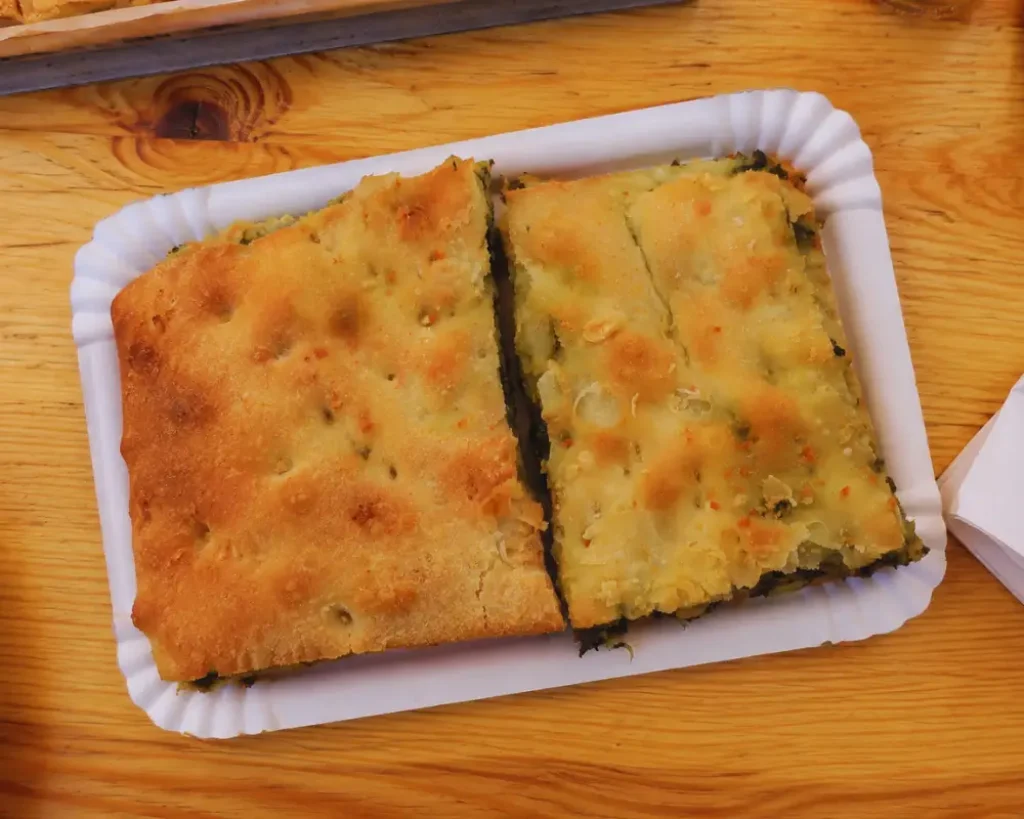
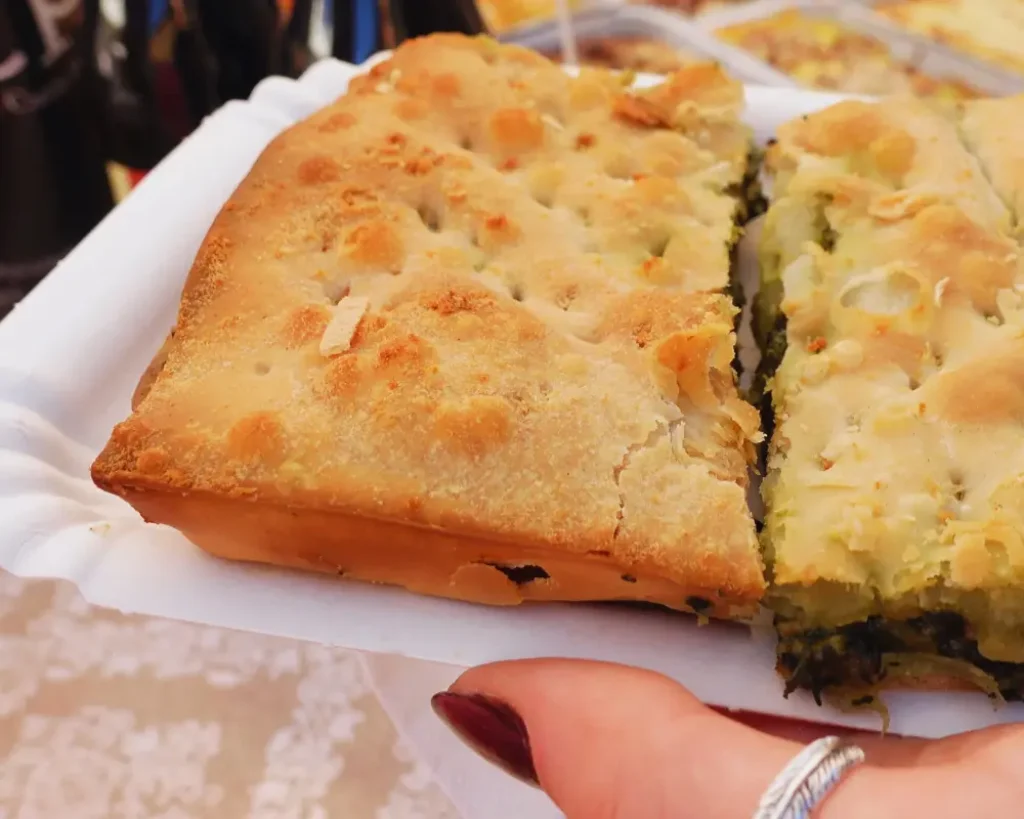
Some places fold ricotta into the filling to soften it. Mine didn’t, and I’m glad, because erbazzone is supposed to be a bit much. It started as a peasant dish made from beet stalks and whatever greens were around, and it still eats like something built to fill you up cheaply. That’s the whole point.
Lambrusco: You’re Probably Picturing the Wrong Wine
If the only Lambrusco you’ve had is the sweet, syrupy stuff that used to get exported abroad, forget it. That’s not what people drink here.
Around Reggio you want Lambrusco Reggiano DOC, specifically the secco style, which means dry, and it’s served cold, sometimes in a plain tumbler instead of a wine glass, because nobody here is precious about it. It gets poured the way you’d pour a soft drink at lunch.
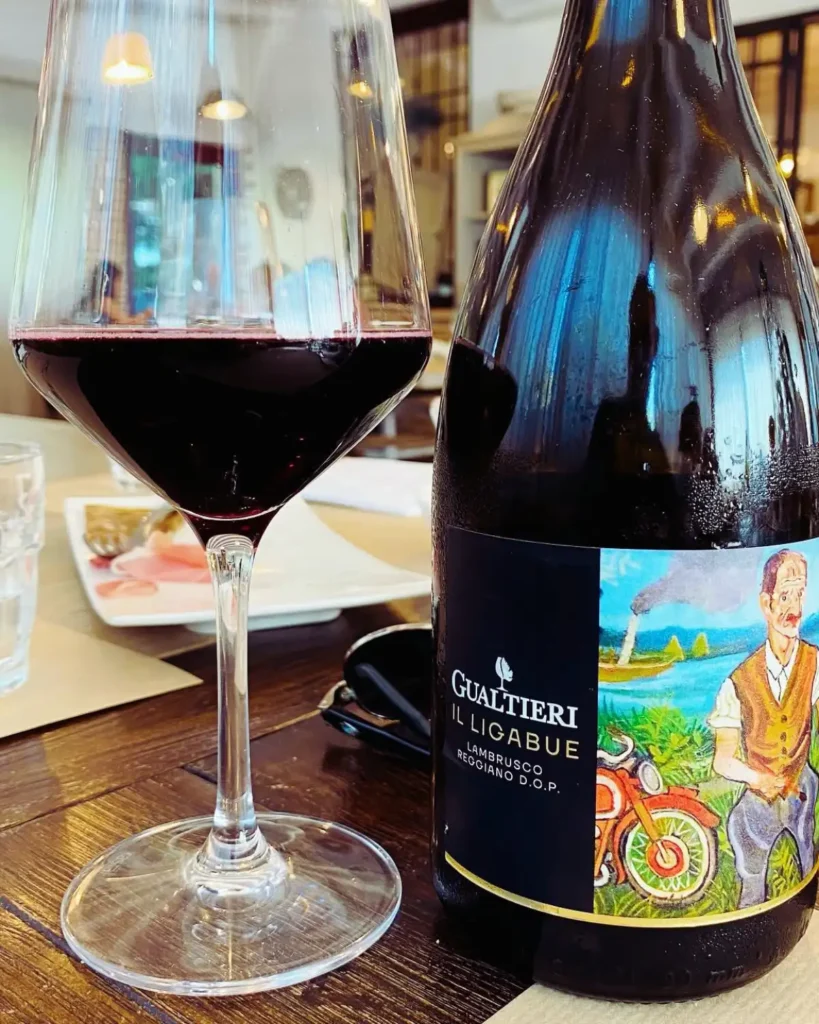
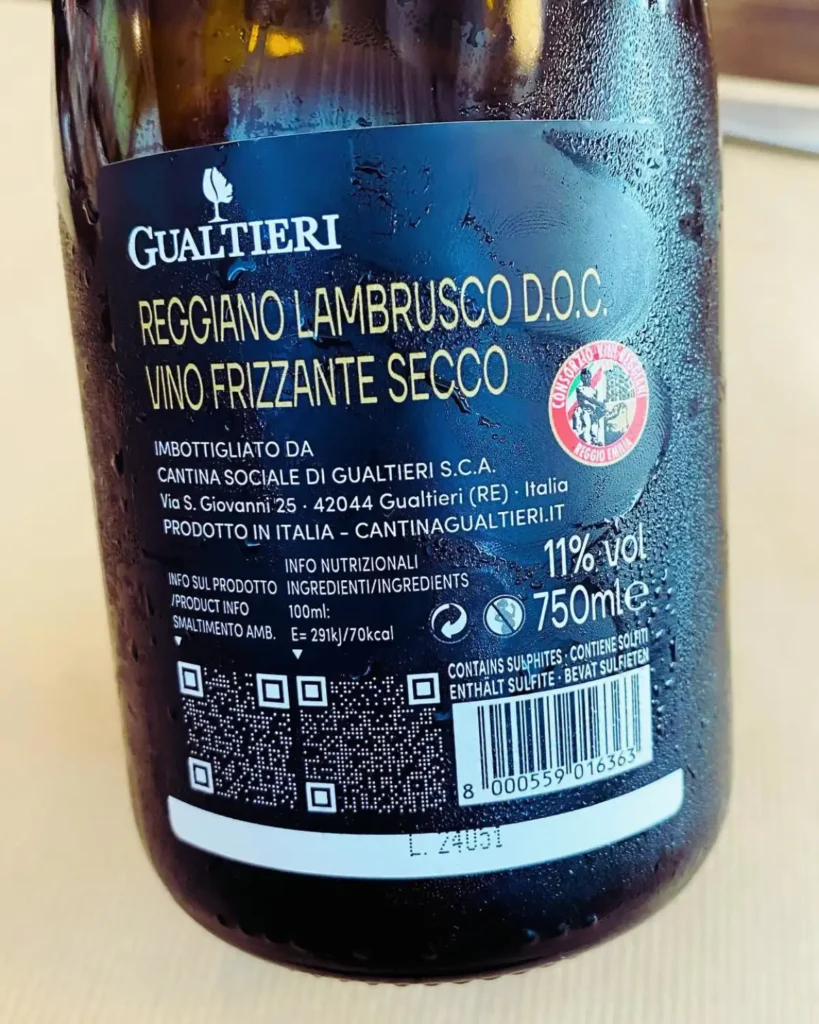
The dryness and the fizz cut straight through the lard and cheese in the erbazzone, which is exactly the job it’s meant to do. I had a glass alongside my slice and it just worked, no ceremony required.
Spongata: A Christmas Dessert You Can’t Find Anywhere Else
I came back through Reggio in December on a separate trip and found this completely by accident, in a small pasticceria near Piazza San Prospero.
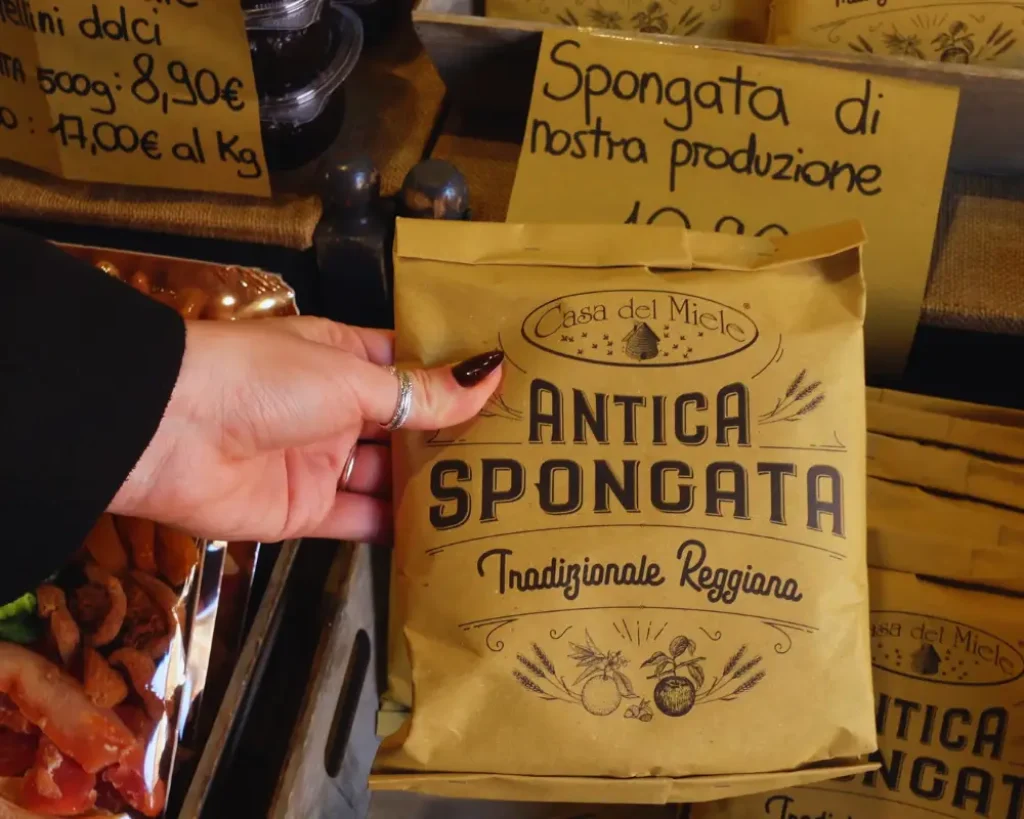
Worth knowing about specifically, because it’s made almost nowhere else, just here and in nearby Modena. I’d been asking around Bologna for something like it for days and kept getting blank looks.
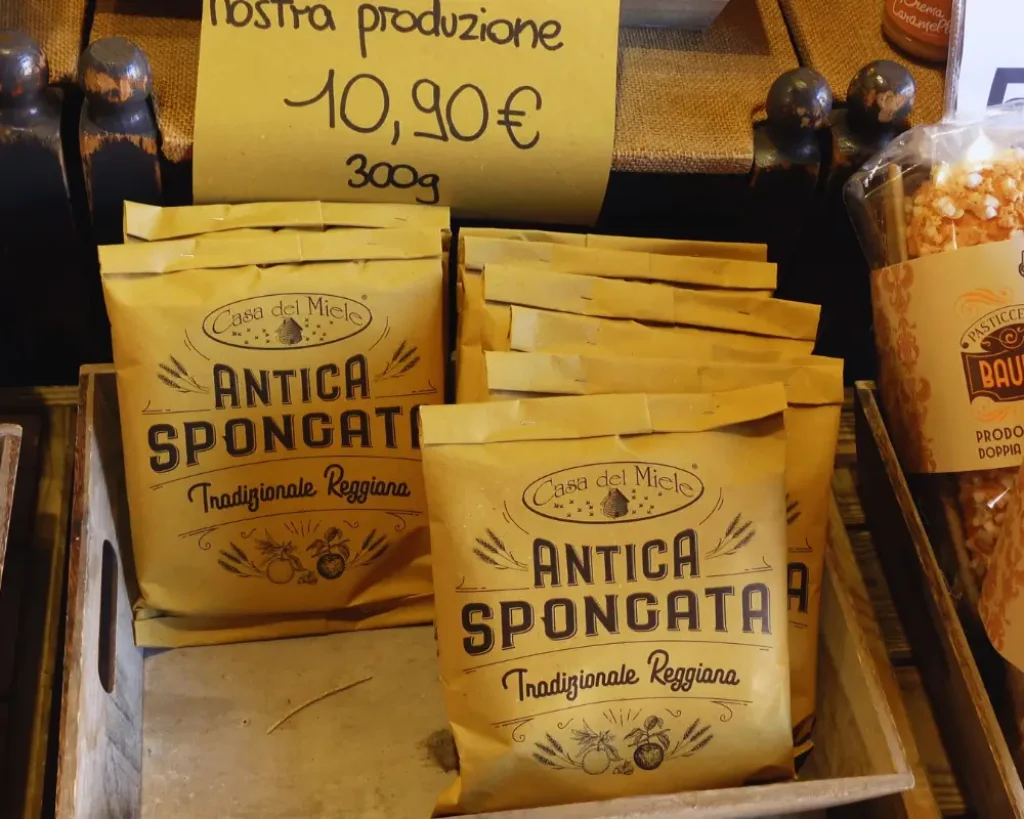
It’s a pie packed with dried fruit, nuts, and warm spice, dense and a little sticky, closer to a British mince pie than anything else I can compare it to, but better.
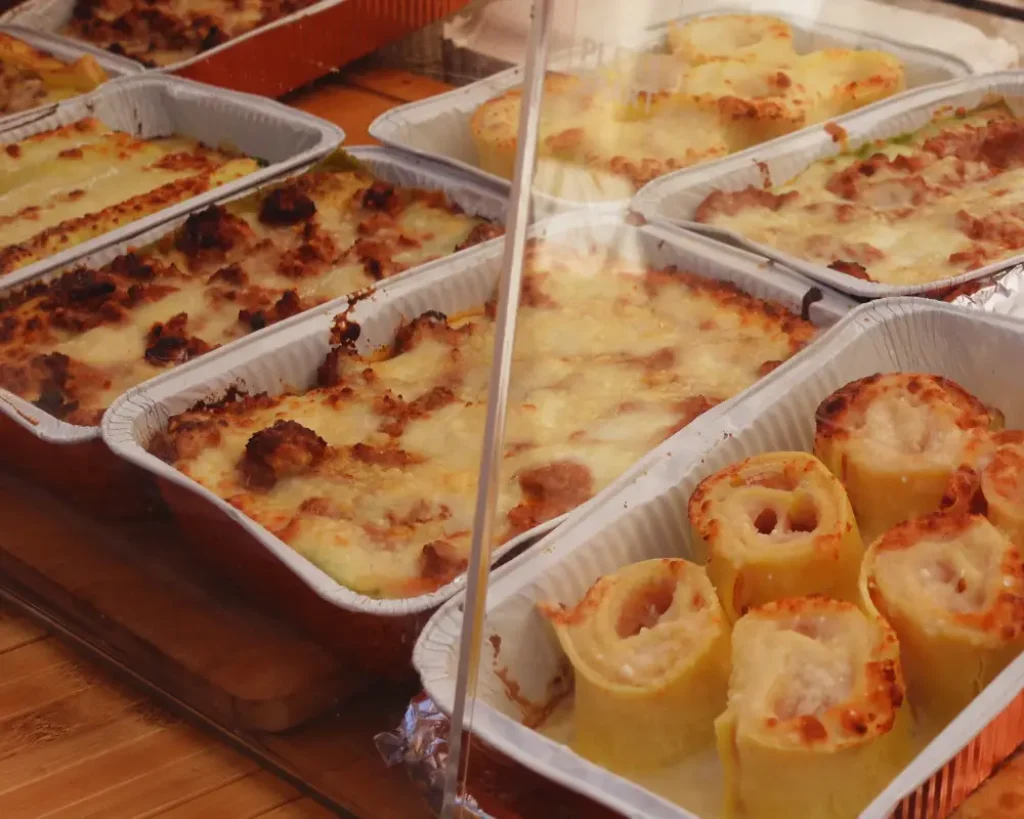
I tried to order a slice in broken Italian, mixing up my verbs completely, and the woman behind the counter just laughed, cut off a thick wedge with a knife bigger than the pie itself, and waved me off before I’d even gotten my wallet out. I’ve thought about that slice more times than I’d like to admit.
Sitting Still, Which Is Part of the Trip
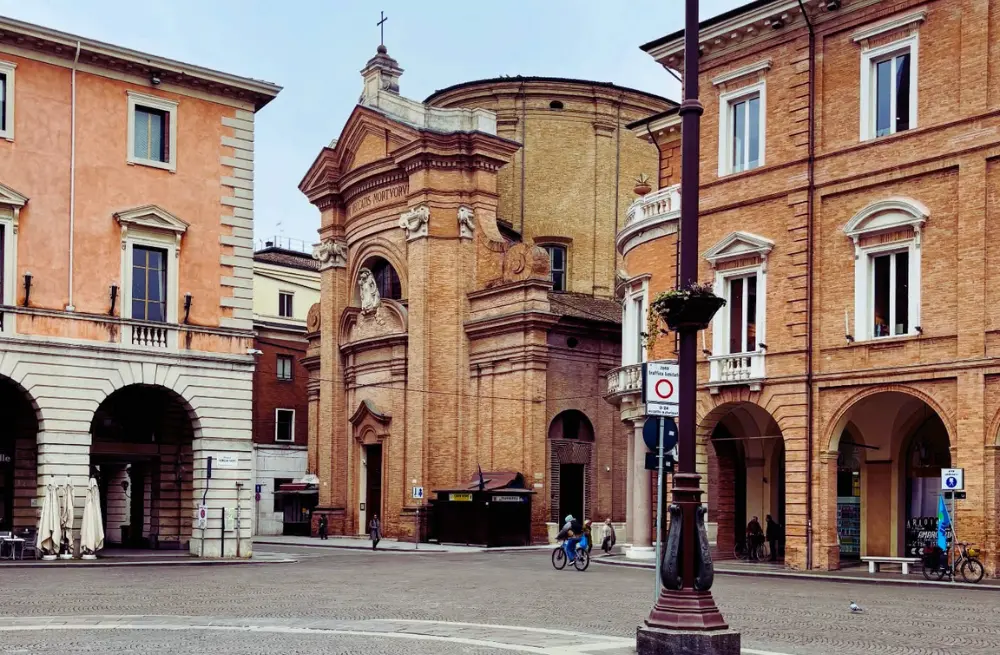
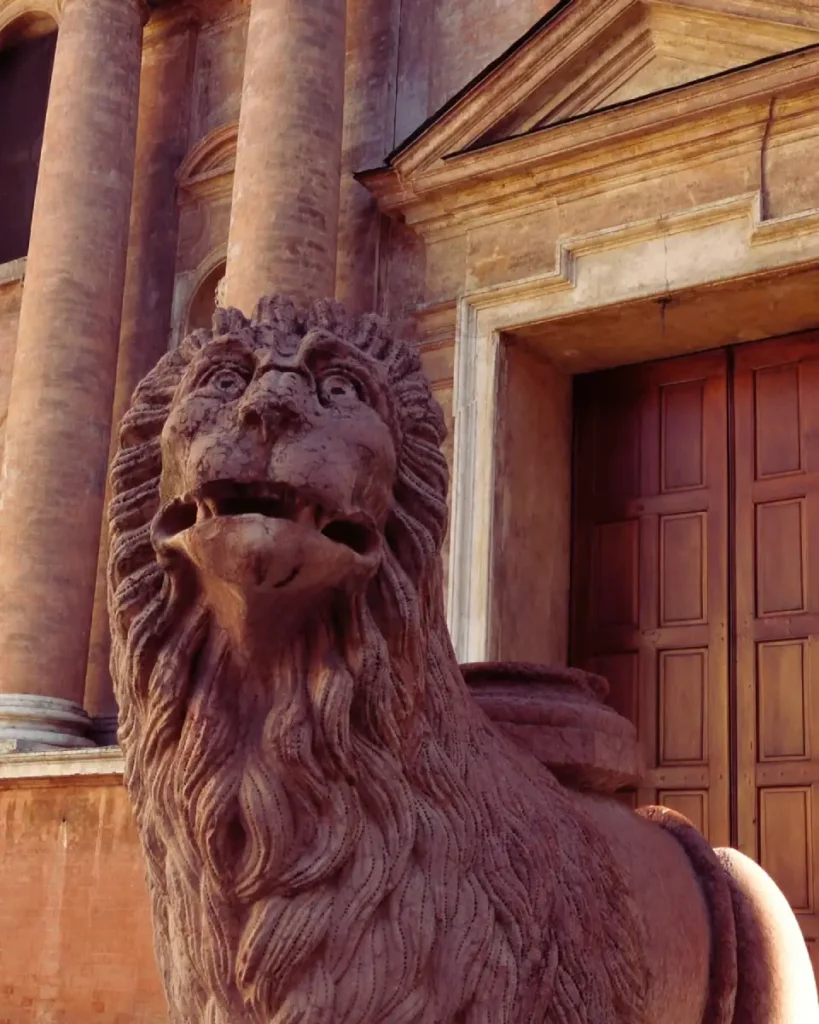
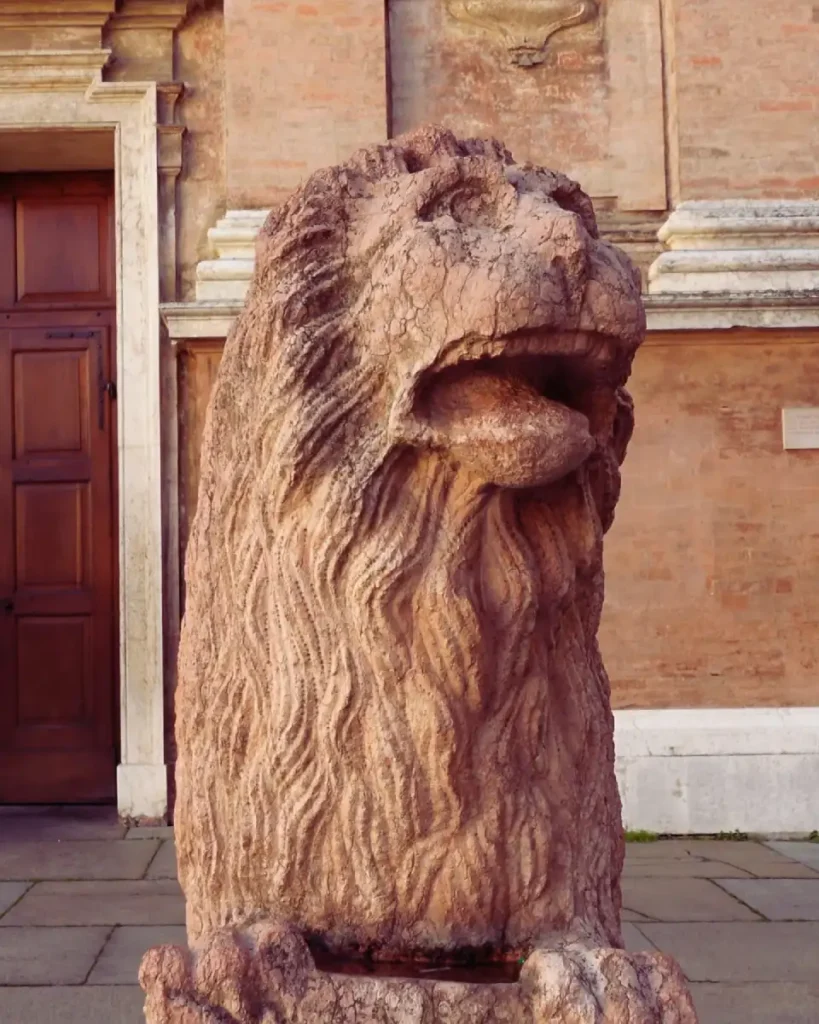
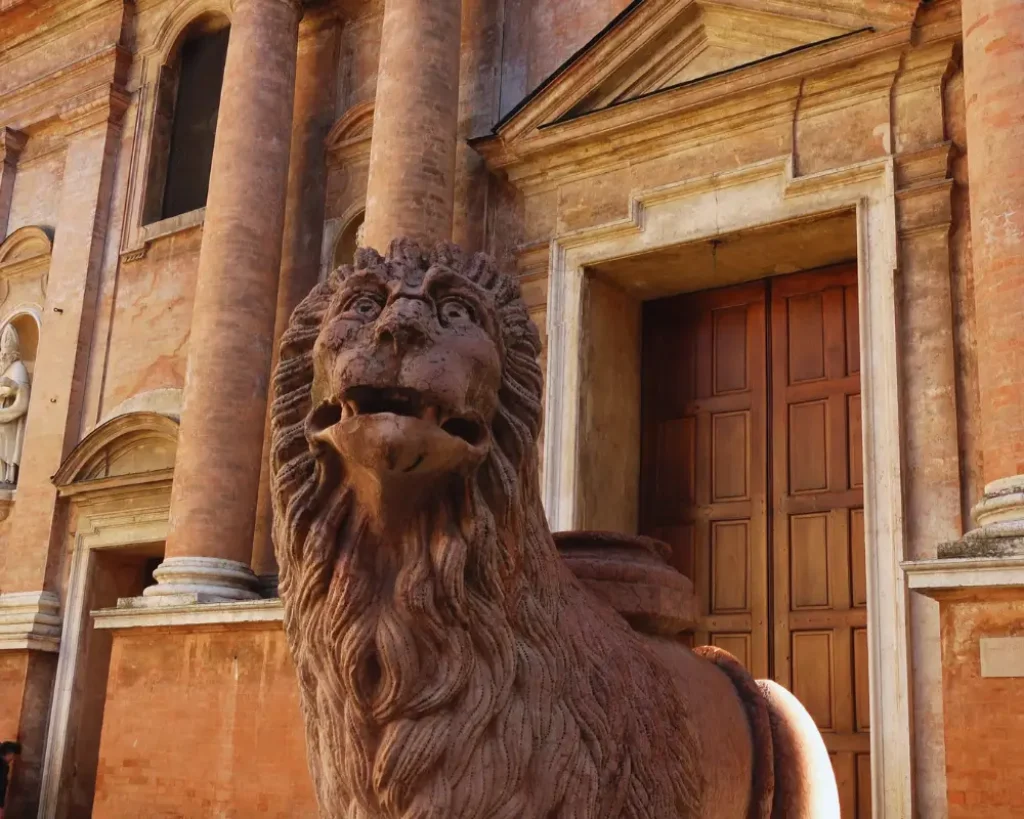
After all that, the best thing to do is nothing in particular. Piazza San Prospero is small, closed in by the portico of Via Broletto on one side and the basilica on the other, with two marble lions guarding the church steps.
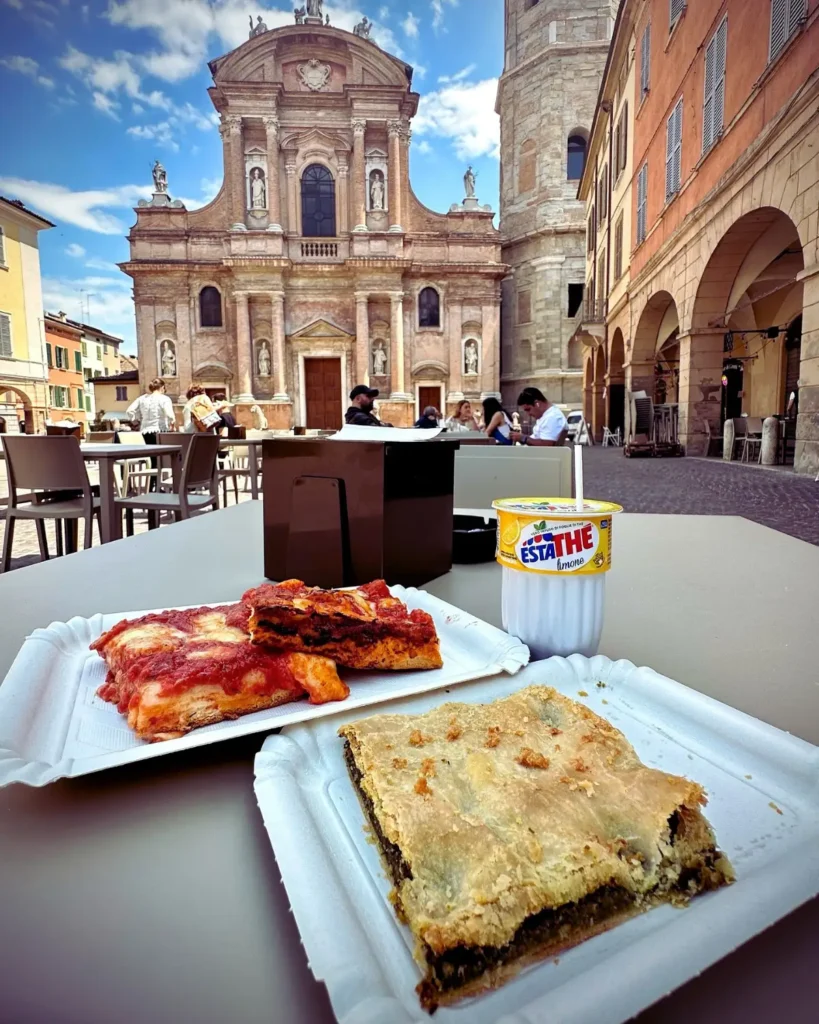
I sat at a cafe table there with an espresso and just watched the square empty out as the evening cooled off. Someone’s dog kept trying to get into the church. Bells went off at some point and nobody except me looked up.
That half hour with a coffee, doing nothing at all, is honestly one of the things I remember best from the whole trip.
Where to Stay in Reggio Emilia
Stay in the old town, close enough to walk to either Piazza Prampolini (the main square, with the cathedral) or Piazza San Prospero just behind it. The historic center is small enough that you don’t need a car, and you won’t want one once you see how narrow some of these streets get.
Look for a small hotel or a bed and breakfast in one of the older buildings rather than a chain. Reggio isn’t getting anywhere near the tourist numbers Bologna does, so places here tend to be better value for the same amount of charm.
If you’re already based in Bologna, Modena, or Parma, Reggio also works fine as a day trip, since it’s a short train ride from any of them. But I’d still try to spend one night if you can manage it. Once the market stalls get packed up and the day-trippers head back to the station, the piazzas empty out, and the city feels like something you get to keep to yourself for an hour or two.
The Old Town Is Perfect For:
- Couples or solo travelers who want to walk everywhere
- Anyone folding Reggio into a bigger Emilia-Romagna trip
- People who want the Bologna or Parma food scene, minus the crowds
I Wouldn’t Recommend Staying Here If:
- You’re driving and don’t want to deal with the restricted traffic zone (ZTL) in the historic center. Park on the edge and walk in instead.
Going Behind the Scenes: How Parmigiano Reggiano Is Actually Made
The best thing I did in Reggio wasn’t eating. It was going to Latteria La Grande, a working dairy just outside the city, to watch Parmigiano Reggiano get made from a bucket of milk to a finished wheel.
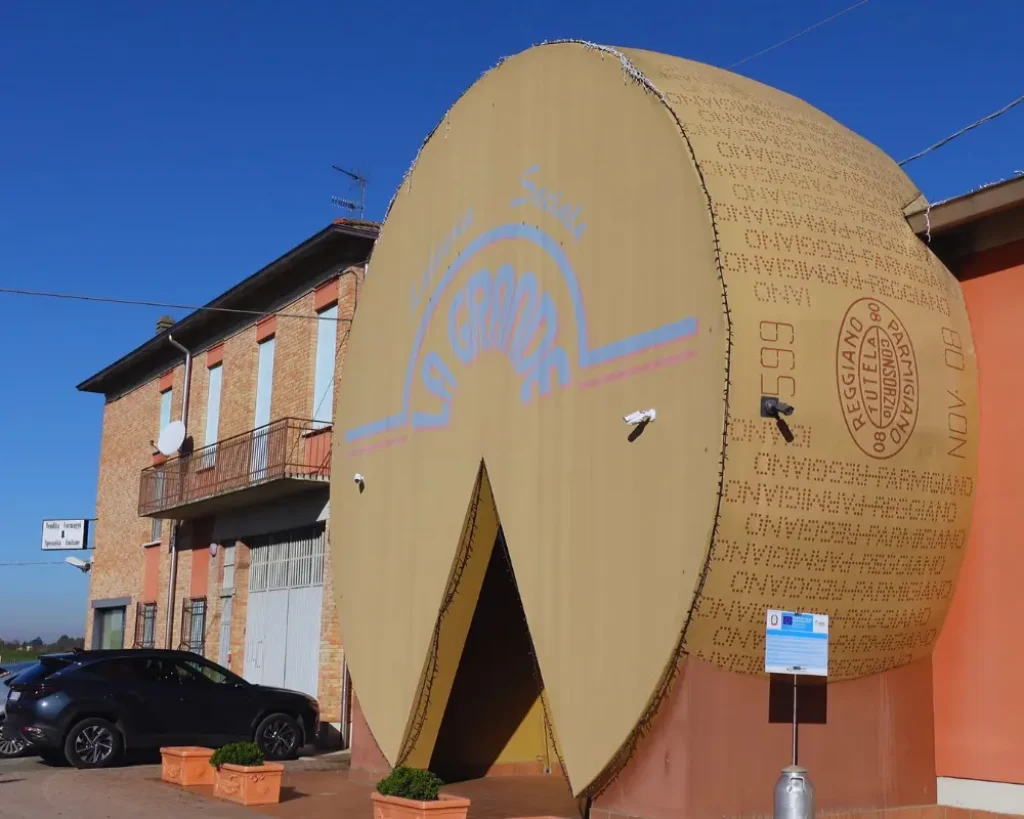
First, a quick fact worth knowing before you go: this cheese isn’t just “parmesan,” and the name is legally protected. It can only be made inside a specific zone covering Parma, Reggio Emilia, and Modena, plus a small slice of Bologna and Mantua. The cows are specific breeds, and they can only eat grass and hay grown in that same zone. That’s the entire reason nobody’s managed to copy it anywhere else in the world. People have tried. It never comes out the same, even when they know every step.
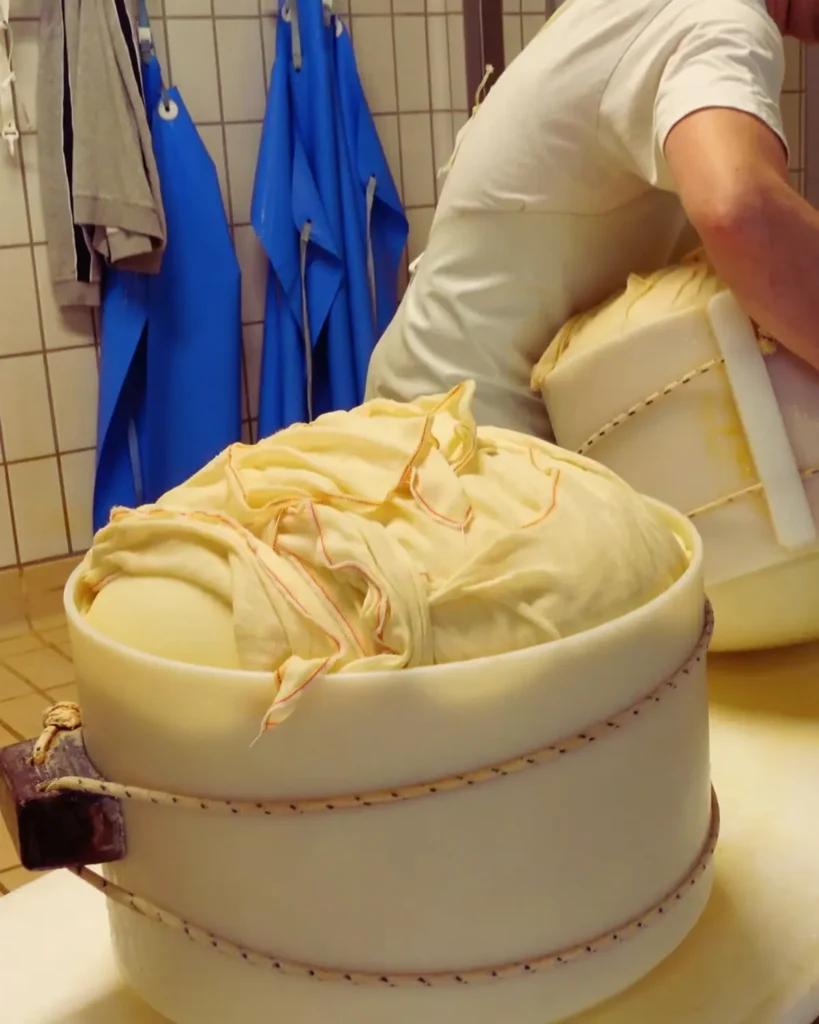
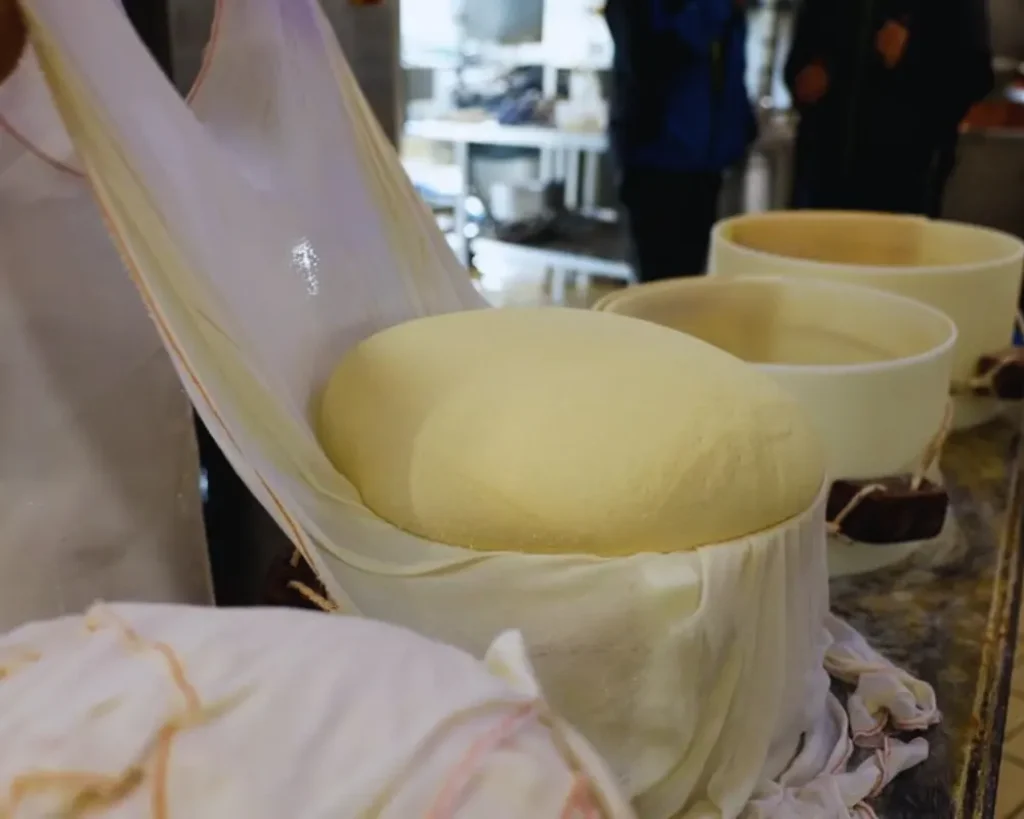
The room where it starts smells like warm milk and not much else. The skimmed milk left over from the evening before gets mixed with fresh milk from that same morning, no more than two hours old, in enormous copper vats shaped like upside-down bells. Whey and a natural enzyme taken from a calf’s stomach go in next, and the mixture starts to thicken almost right away, curdling into soft clumps you can watch form on the surface.
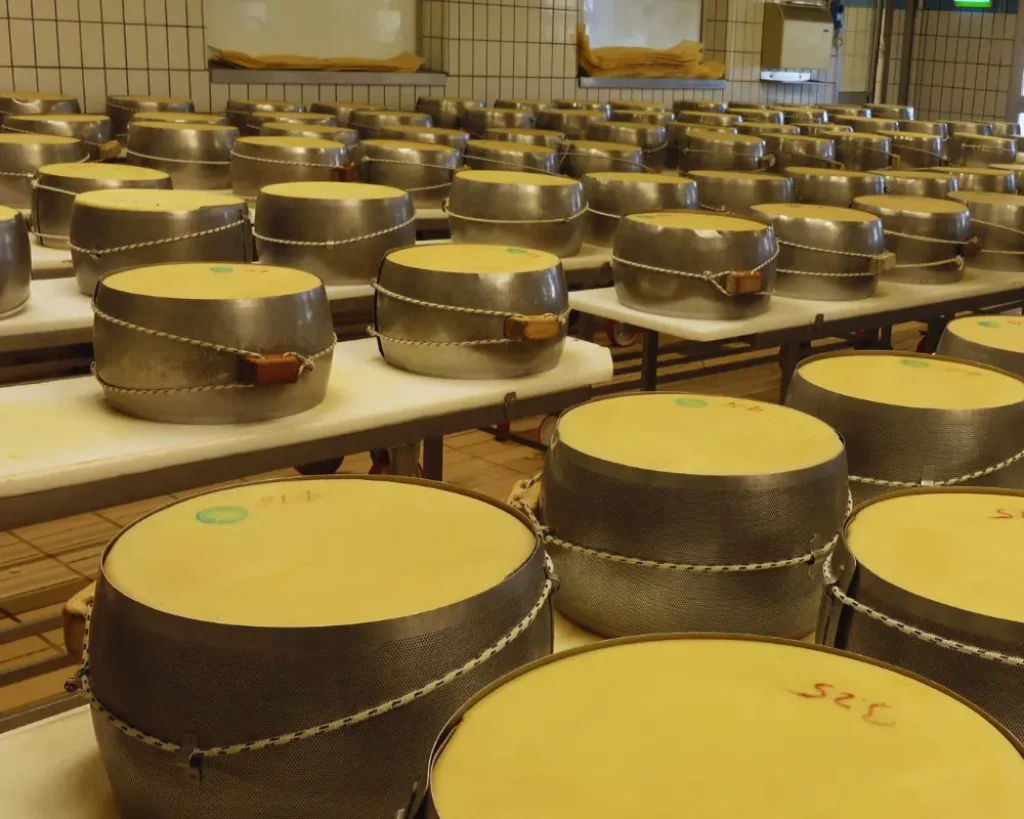
One number stuck with me for the whole tour: it takes about 1,000 liters of milk to make just two wheels of cheese. Two. The vat is warmed to around 36 or 37 degrees Celsius, and after roughly an hour, the whole thing sets into a solid mass at the bottom. Nothing here goes to waste, either, the leftover whey goes straight into making ricotta in the next room over.
From there, the young wheels move into another room, where each one gets flipped upside down three times over the first day. A cloth band gets wrapped around every wheel to stamp it with the marks required by the consortium that governs the whole process, and it stays wrapped overnight. After three days, the wheels go into a brine bath for 20 days, then get a couple more days just to dry off.
Then comes the part that actually stopped me. The aging room is a warehouse stacked floor to ceiling with wheels on wooden shelves, rows of them running back further than I could see, and the smell in there is heavy, sharp, almost sour in a good way. It’s the kind of smell you feel more than notice.
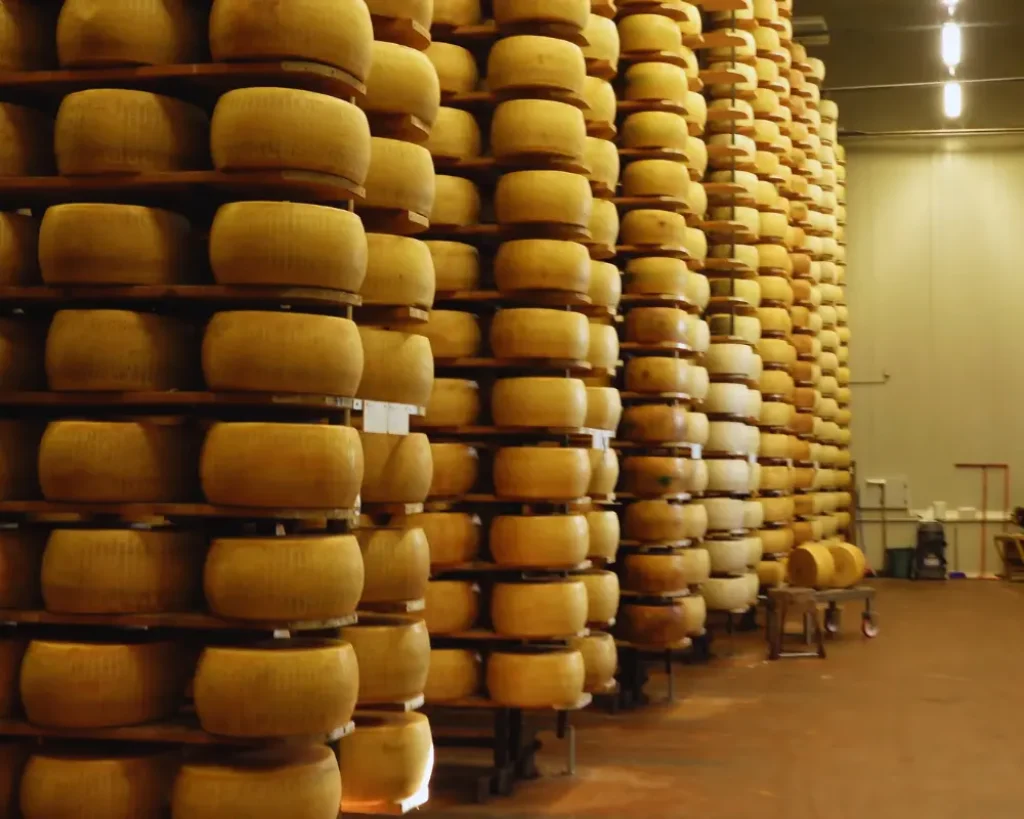
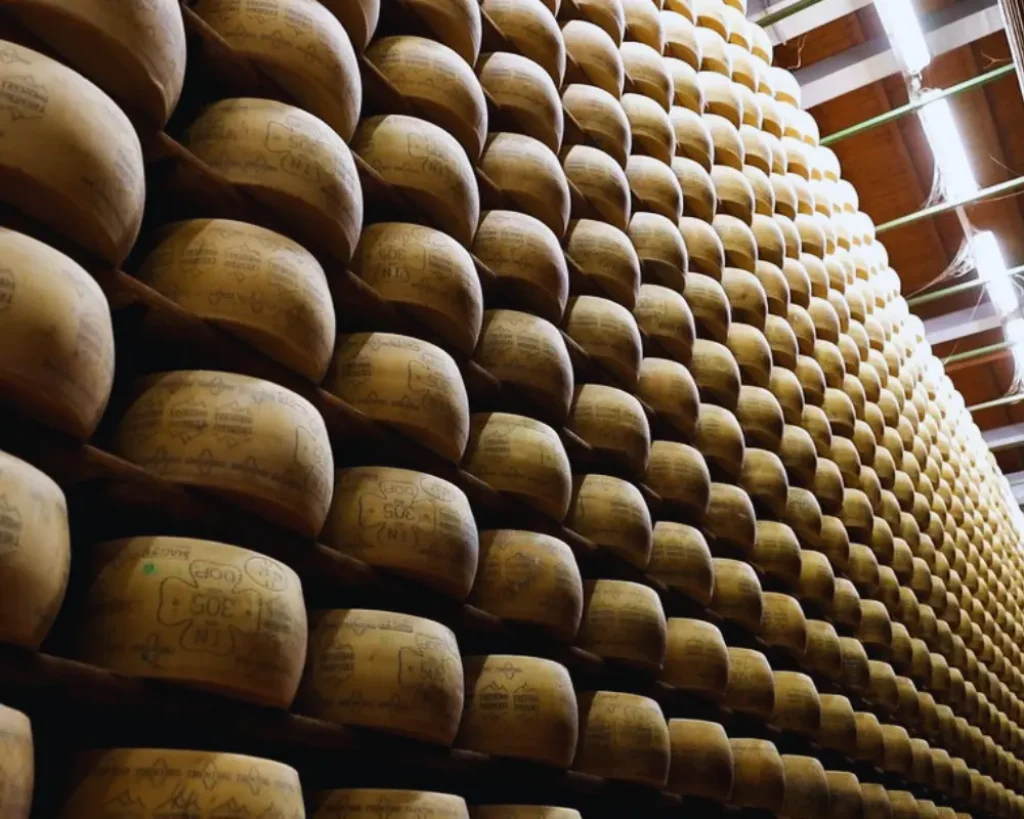
After a full year, every wheel gets checked to see if it’s earned the right to be sold as real Parmigiano Reggiano, or whether it needs to keep aging. Inspectors go over each one for holes or cracks, and if they find a flaw, the wheel gets scored with lines and demoted to a plain, unnamed table cheese instead. So every wheel that passes has actually earned it.
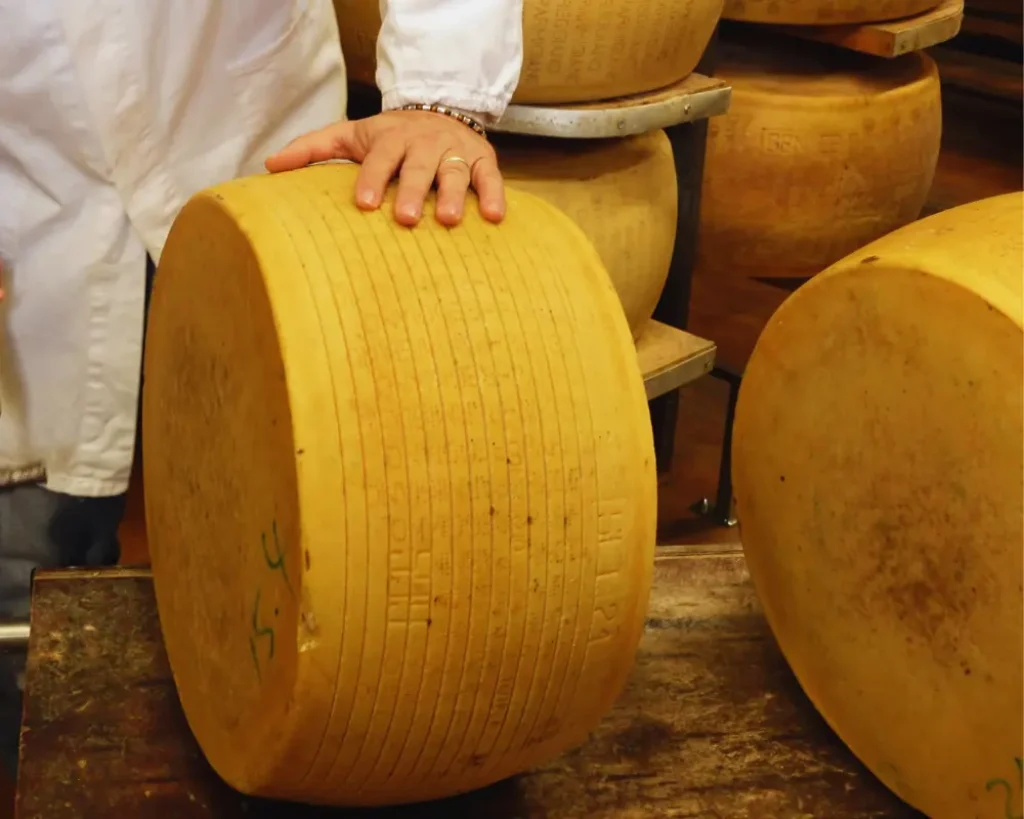
At the end, I got to taste two side by side. A 24-month wheel first, which was mild, a little milky, easy to eat on its own.
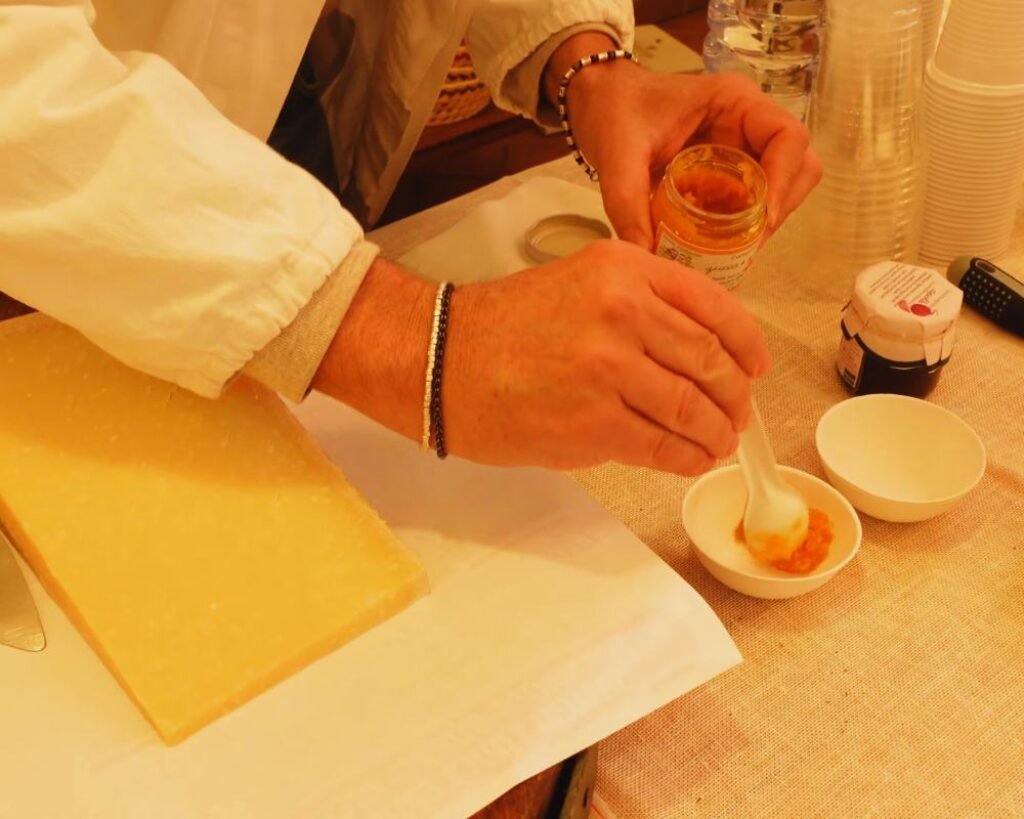
Then a 50-month wheel, aged over four years, and this one was genuinely the best Parmigiano Reggiano I’ve ever had, sharp and almost crystalline in texture, with little crunchy flecks that pop against your teeth. If you ever do a tasting like this, save the oldest wheel for last. It’s worth the wait.
The History Nobody Tells You About
Reggio isn’t only a food stop. A few stories from around the city genuinely surprised me.
The room where the Italian flag was born
The green, white, and red flag wasn’t decided in Rome or Milan. It was chosen right here in Reggio Emilia, in 1797, and you can walk into the exact room where it happened. It’s inside the town hall, called the Sala del Tricolore, and they still hold weddings in it. A ceremony had just wrapped up as I got there, guests still filing out onto the stairs outside. You climb up to look down over the room from a kind of balcony, and it has this odd theater feel to it, like standing backstage before a show rather than inside a government building.
The fog that saved the city
Reggio’s patron saint is San Prospero, and there’s an old legend attached to the basilica named after him, the one with the marble lions I mentioned earlier.
Supposedly, when Attila and the Huns were marching on the city after tearing through Rome, San Prospero prayed and a fog rolled in thick enough to hide the whole city from them, and Reggio was spared. There’s also a strange old custom tied to his feast day, November 24th.
Back in medieval times, one prisoner scheduled for execution was picked at random each year and pardoned on the spot, as a kind of gift in the saint’s name. Odd tradition, but it saved a life every year it happened.
The artworks that ended up in Germany
This one’s my favorite. Reggio’s churches used to be full of serious art. Then the city came under the rule of the d’Este family, who were obsessive collectors, and they pulled a huge amount of it out of local churches and into their own residence. Years later, one of the dukes fell badly into debt and had to sell off a big chunk of that collection to cover it.
That’s how a lot of Reggio’s original artworks ended up in a museum in Dresden, Germany, where a lot of them still hang today. So if you’re ever in Dresden looking at an old Italian painting, there’s a decent chance it started life in a church a few streets from where I ate that erbazzone.
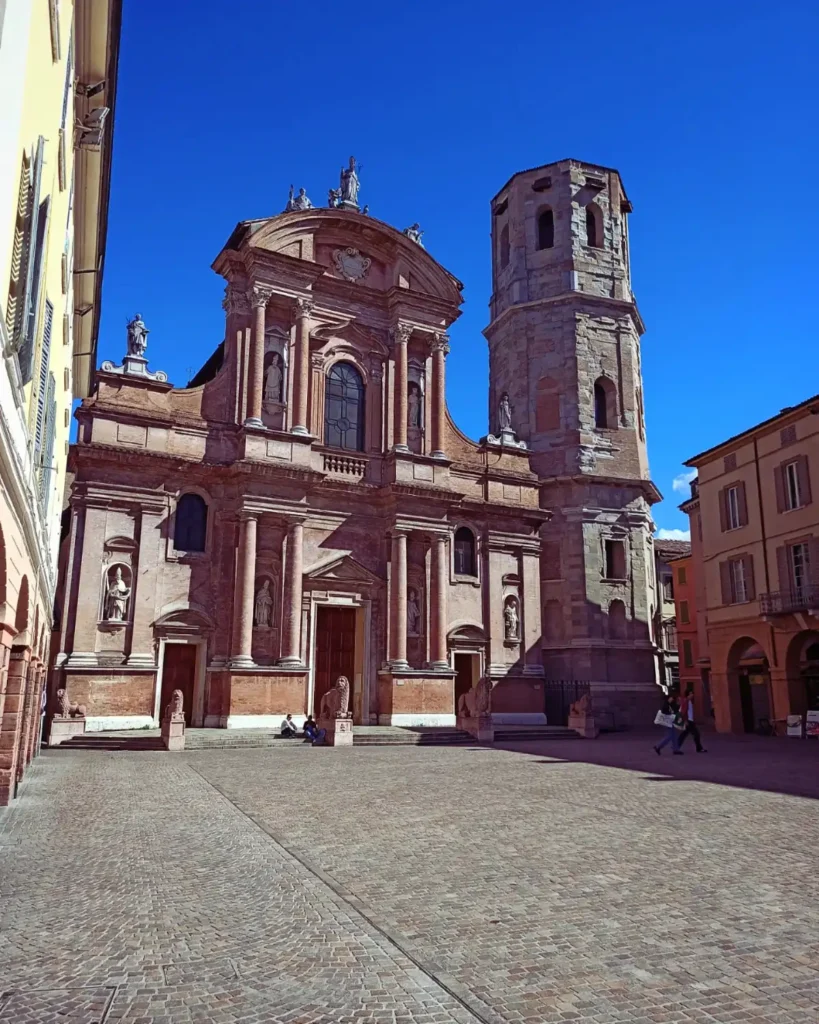
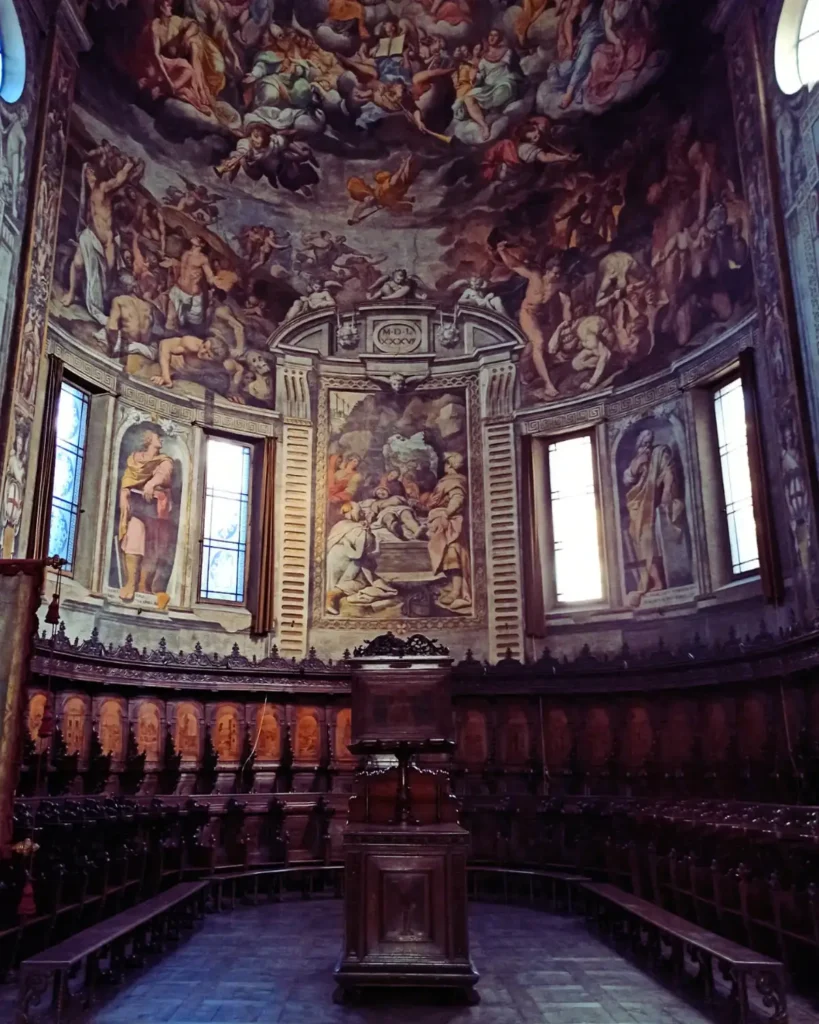
One more thing worth knowing, mostly because it explains why the region is called what it’s called: Reggio sits directly on the Via Aemilia, the dead-straight Roman road built around 187 BC that runs the length of the region. That’s where the name Emilia comes from. Those narrow, cobbled streets in the old town have technically been a stop on this road for over two thousand years.
Getting There
One thing worth knowing before you book anything: Reggio Emilia has two train stations, and they are not close to each other. Get this wrong and you’ll lose half an hour before your trip even starts.
The one you want is just called Reggio Emilia, sitting right on the edge of the old town. This is the regular station, the one the slower regional trains use, and from here it’s a short walk straight into the center. If you’re coming from Bologna, Modena, or Parma, this is almost certainly your train.
The other one is Reggio Emilia AV Mediopadana, and it’s a completely different thing. It’s built for the high-speed trains running between Milan and Bologna, and it’s the only stop those trains make along the way. It’s also about 4 kilometers outside the city, sitting out past the highway on its own.
It’s a strange, beautiful building too, all curved white steel, worth a look if you’re into architecture. But if you step off a fast train there thinking you’re a short walk from town, you’re not. Nobody walks that stretch. You’ll need a bus or a taxi into the center, and it adds a good 15 to 20 minutes either way.
If your only option is a high-speed ticket to Mediopadana, that’s fine too, just don’t plan anything for the first half hour after you land. Grab a taxi outside, or find the bus into town, and go from there.
If you’re driving, Reggio Emilia sits right on the A1, the highway running from Milan down through Bologna and Florence. From Milan it’s about an hour and a half. From Bologna, closer to forty-five minutes. Once you’re near the center, just leave the car on the edge of the old town and walk in. These streets weren’t built for cars, and honestly, you don’t want to be driving them anyway.
If you’re flying in, Bologna’s airport is the closest one with real international connections, and the train up to Reggio Emilia from there is quick and easy.
Well..If any of this made you curious, put Reggio Emilia on your list. It’s underrated, it’s welcoming, and honestly, it might be the best day I’ve had in Emilia-Romagna so far.
Frequently Asked Questions about Reggio Emilia
Is Reggio Emilia worth visiting?
Yes. It gets a fraction of the visitors that Bologna, Parma, or Modena do, but the food, the history, and the old town hold up just as well. If you like Emilia-Romagna, it’s an easy add to the list.
How many days do you need in Reggio Emilia?
One full day covers the old town, the food, and a Parmigiano Reggiano tour comfortably. Two days if you want to slow down, or if you’re spending a night rather than day-tripping in.
Is Reggio Emilia a good day trip from Bologna?
Yes, it’s a short train ride from Bologna, Modena, or Parma, so it works well as a day trip from any of them. I’d still recommend one night if your schedule allows it, since the city feels different once the day-trippers leave.
What is Reggio Emilia known for?
Food, mostly. It’s where erbazzone and spongata come from, and it sits inside the small zone allowed to produce real Parmigiano Reggiano. It’s also, less famously, where the Italian flag was first adopted, in 1797.
Do I need a car in Reggio Emilia?
No. The old town is small and walkable, and the historic center has restricted traffic zones (ZTL) that make driving in more hassle than it’s worth. Park on the edge if you’re driving, or just take the train.
What’s the best time of year to visit?
December if you want the Christmas atmosphere and spongata, which is only really made here and in nearby Modena. Spring or summer if you’d rather sit outside for long aperitivo evenings in the piazzas.